
Unified Support Home - USH
Turning support fragmentation into a scalable system
What this project was
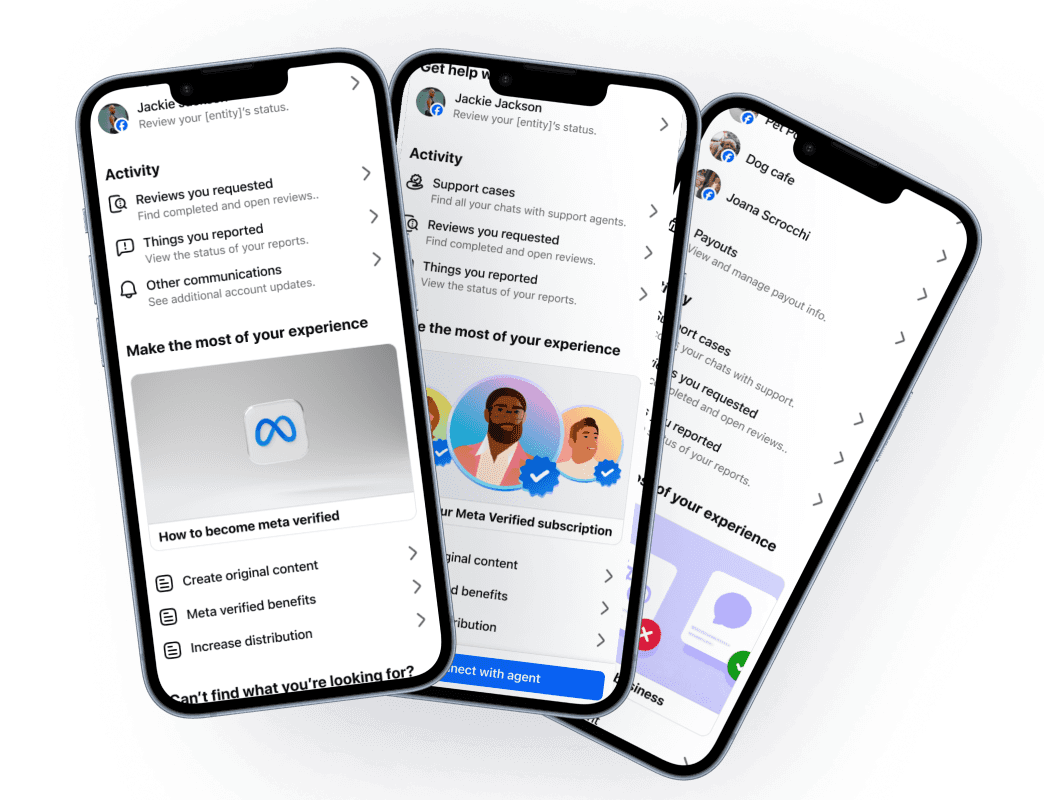
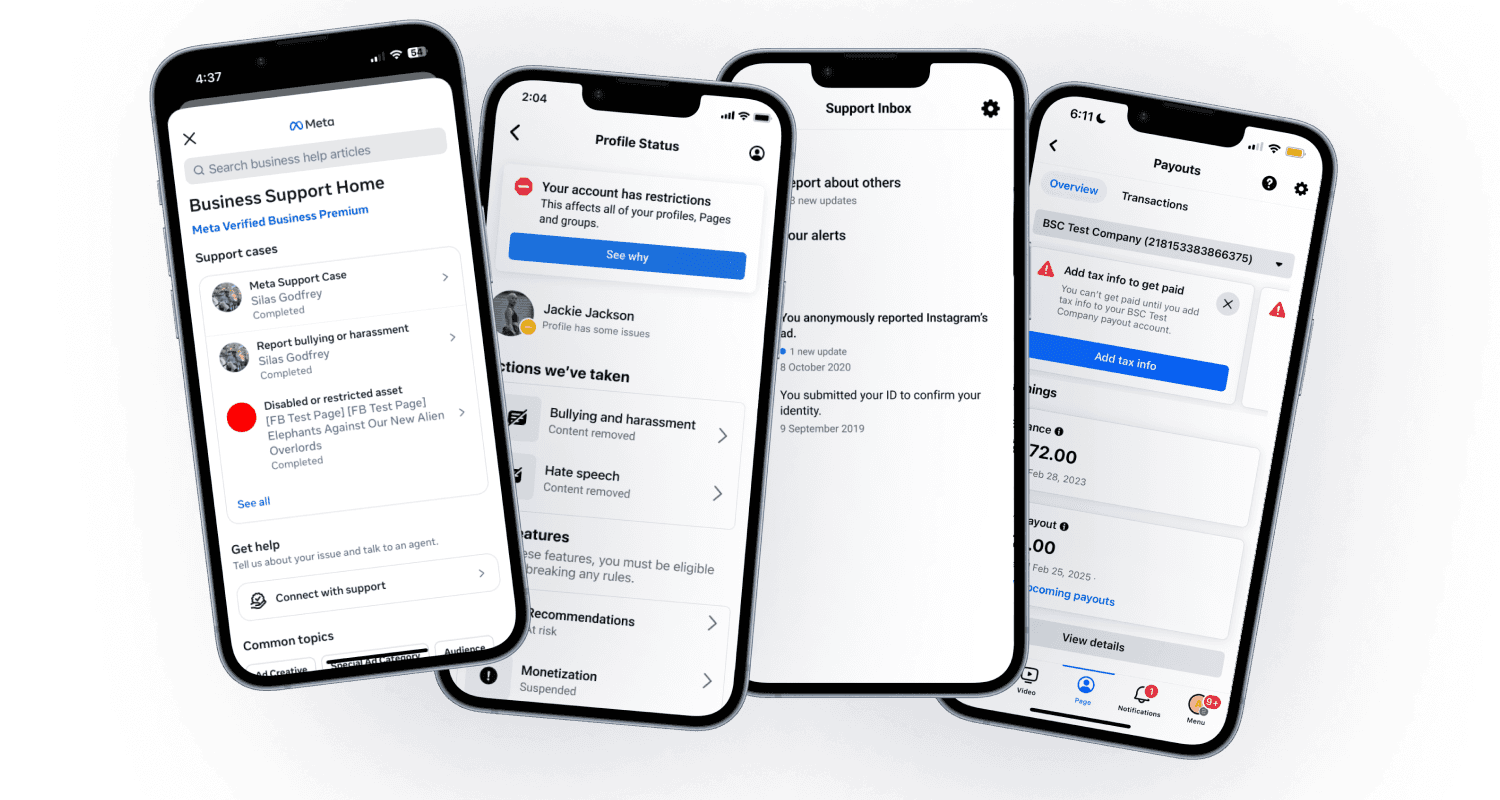
Unified Support Home was a support experience for people, creators, and businesses on Facebook and Instagram who needed help understanding or resolving enforcement actions. For example, when a post was removed, an account was restricted, monetization was limited, or a business asset was impacted for violating platform policies. It brought status, explanations, appeals, recovery actions, and help pathways into a single, clearer support destination.
At a glance
Challenge
Support had fragmented across surfaces, ownership models, and user pathways, making it harder for people to understand what happened, what to do next, and whether issues were resolved.
Approach
I led Unified Support Home as a system-level redesign, reframing fragmentation as a structural problem and defining a phased strategy to centralize discovery, reduce redundant pathways, and establish a more scalable support model.
Impact
Improved CSAT by 13%, enforcement seen-rate by 17%, and content takedown resolution by 19.8%, while reducing payout holds by 14% and establishing the foundation for xApp scale.
Why this mattered
What appeared to be a support UX issue was actually a system problem. As Meta’s support ecosystem expanded, users were navigating disconnected surfaces with different roles, signals, and levels of actionability. The result was slower resolution, lower confidence, and a support model that was increasingly difficult to scale consistently across cohorts and products.
At stake
User clarity: People had to self-diagnose where to go across overlapping support surfaces.
Business performance: Fragmentation slowed resolution and weakened trust, engagement, and monetization outcomes.
System scalability: Duplicated pathways and inconsistent architectures limited Meta’s ability to scale a coherent support model.
What I led
Took an open-ended charter expansion and turned it into a defined strategy, named the problem, built the phasing, and created the milestones
Decided to phase it: solve for user clarity first, then consolidate, rather than redesigning everything at once
Defined the architecture: unified IA, consistent lifecycle states, and a support model that could scale to new cohorts without starting over
Set the constraints for cross-functional alignment, what could and couldn't change in each phase, before anyone committed resources
Strategic milestones
Centralized discovery
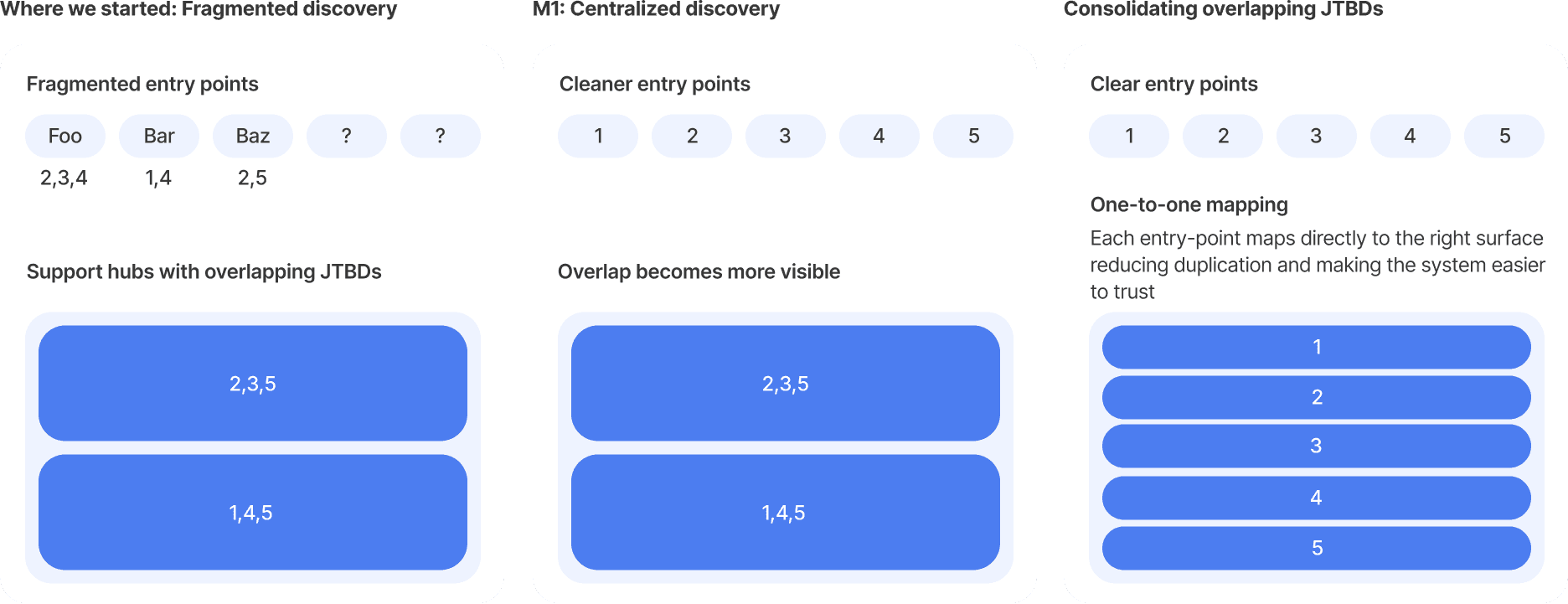
I reduced a fragmented set of support entry points into a single clearer destination organized around user intent. This removed much of the trial-and-error users faced when trying to determine where to start and made actionable paths easier to identify.
Consolidated overlapping jobs-to-be-done
Once discovery was centralized, the next source of friction became clear: multiple surfaces were still solving the same underlying jobs with slight variations in flow, ownership, and eligibility. I mapped the ecosystem by job-to-be-done and consolidated redundant paths where trust and support constraints allowed.
Created a scalable support foundation
Rather than over-correcting the system in a single pass, I phased the transformation to solve immediate clarity issues first while establishing reusable support patterns, stable lifecycle states, and a stronger foundation for long-term scale across cohorts, surfaces, and future xApp experiences.
Authored the connective logic across the vision
As Meta's support strategy evolved into three parallel workstreams - centralized, contextual, and conversational - I co-authored the xMeta Resolution Framework: a cross-org model, built on a year of platform dogfooding, that defines how all three pillars triage and route user issues by severity, awareness pathway, and resolution destination. The framework was presented and adopted as the connective logic across two orgs.
Impact
By reducing fragmentation across discovery, decision-making, and support architecture, the work improved both user clarity and system performance. Users were better able to understand their status, find the right next step, and move through support with more confidence.
User and support outcomes
+13% CSAT
+17% enforcement seen-rate
+6.4% USH engagement
Resolution and business outcomes
+19.8% content takedown resolution rate
-14% payout holds
Single-digit increase in post-enforcement video time spent