
Self Remediation Platform - SR
Turning self-remediation expansion into a principled, scalable system
What this project was
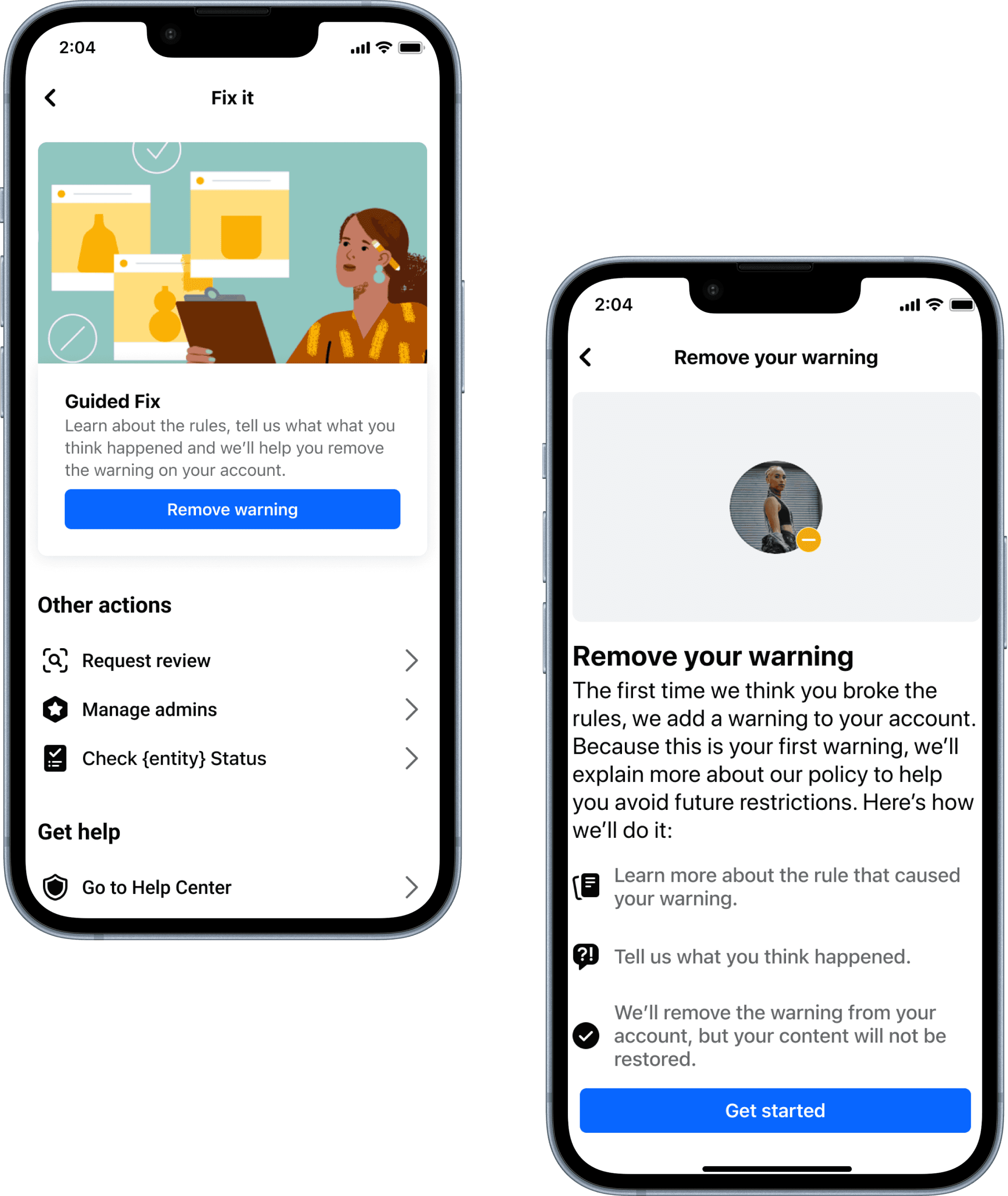
Self-Remediation was an experience that helped people, creators, and businesses recover from certain integrity issues without needing direct support from operations teams.
It assumed good intent: that many users do not fully understand Facebook’s policies, especially when those policies are complex or context-dependent. The experience used education, acknowledgment, and commitment to help users understand what went wrong, take accountability, and avoid repeating the same violation.
At a glance
Challenge
Self Remediation showed early promise, but its expansion was heading in a risky direction. Without clear guardrails, users could potentially game the system through repeated remediation, creating abuse vectors, policy non-compliance, and legal exposure as the product scaled across workstreams and platforms.
Approach
I stepped in before anyone asked. The expansion model was creating regulatory, abuse, and policy risk the team hadn't fully accounted for, so I built the framework that redirected it. I partnered directly with Policy, Legal, PM, and Engineering to define the principles, eligibility logic, and guardrails needed to make Self Remediation defensible, scalable, and reusable across products.
Impact
Redirected the initiative away from a non-compliant expansion path, created the framework that enabled safe scale, and established the conditions for broader adoption across workstreams and platforms with greater policy and legal confidence.
Why this mattered
What looked like a straightforward product expansion was actually a systems and governance problem. Self Remediation had early traction, but the team was scaling it as if growth were simply a rollout challenge. In reality, the product introduced abuse risk, policy complexity, and legal exposure if users were allowed to repeatedly self-remediate without clear limits.
I stepped in because the expansion path was creating risks the team hadn't fully accounted for. The challenge was not to redesign the interface, but to prevent a promising idea from becoming a liability, and to create the framework that would allow it to scale responsibly across a complex enforcement ecosystem.
At stake
Legal exposure: Expansion without clear constraints risked creating a model that could be challenged as inconsistent, gameable, or non-compliant.
Abuse vectors: Users could potentially learn to exploit remediation pathways rather than meaningfully correct behavior.
Policy defensibility: Policy and Legal needed to be able to review, support, and stand behind each expansion.
Scalability: A product without governing principles becomes harder to expand, govern, and defend.
Business risk: Unsafe expansion could have forced the company to constrain or shut down a valuable initiative instead of scaling it.
What I led
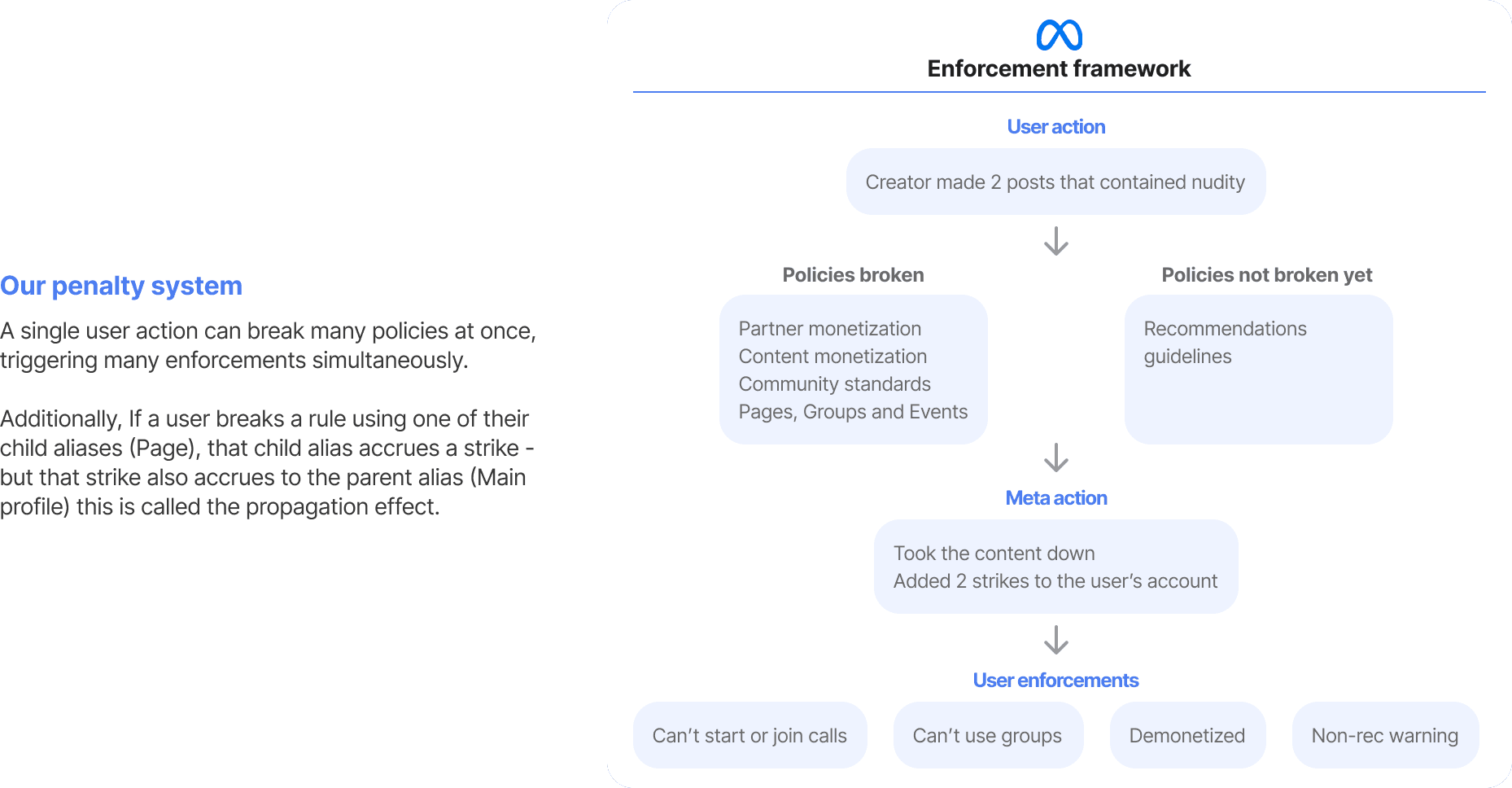
Recognized that the planned expansion model introduced abuse vectors, compliance gaps, and legal risk the team had not fully accounted for.
Authored the Self Remediation playbook, defining the principles, product types, guardrails, and eligibility logic for responsible scale.
Partnered directly with Policy and Legal to align the framework so future expansion decisions could be reviewed, supported, and defended with confidence.
Created the reusable structure that allowed Self Remediation to expand across workstreams and platforms in a principled way.
Three strategic moves
Move 1 — Reframed expansion as a governance problem, not a rollout problem
I recognized that scaling Self Remediation was not simply a matter of adding more use cases. Without clear constraints, the system could incentivize abuse and create policy and legal risk.
Move 2 — Authored the playbook for responsible expansion
I created the framework that defined how Self Remediation should scale, including principles, product types, guardrails, and eligibility logic, so teams could make expansion decisions consistently and defensibly.
Move 3 — Aligned the model across Policy, Legal, and product teams
I worked directly with Policy, Legal, PM, and Engineering to ensure that expansion could happen with shared understanding, reviewability, and confidence rather than local product momentum.
Impact
Self Remediation had already shown promise as an intervention, but without the right framework it risked becoming unsustainable to scale. By redirecting the initiative and creating the playbook for responsible growth, I helped turn it from a risky product push into a defensible system that could expand across additional products, entities, and enforcement models.
While the broader initiative generated strong product outcomes, my direct contribution was the framework that made future expansion safe, principled, and scalable.
Governance + scale outcomes
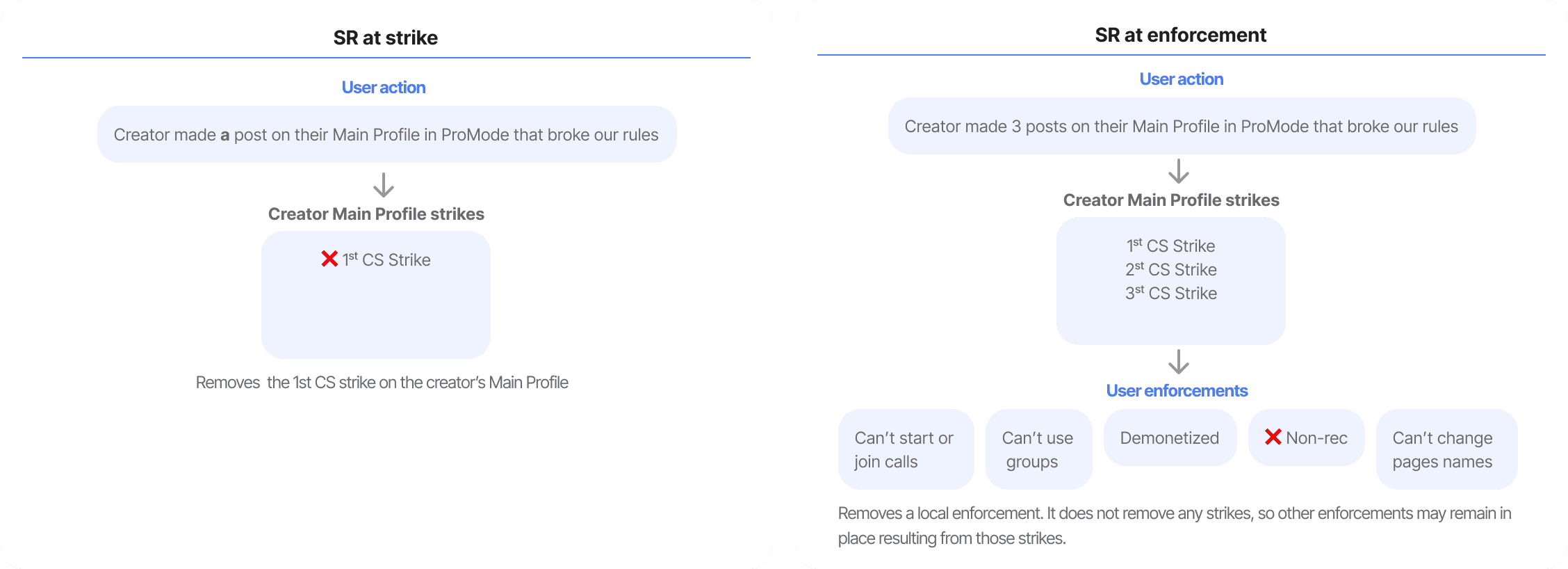
Created the playbook that enabled responsible expansion across multiple self-remediation products
Established a shared model that Policy and Legal could review and support
Reduced the risk of scaling a gameable or non-compliant remediation system
Created reusable product logic that partner teams could integrate into their own systems
Product + business outcomes from the broader initiative
Double-digit reduction in recidivism
Double-digit increase in completion rate
4x higher completion than the existing non-rec appeal flow
Single-digit sentiment gains on legitimacy perception
Positive movement in creator growth metrics